
ORB Trading False Breakouts

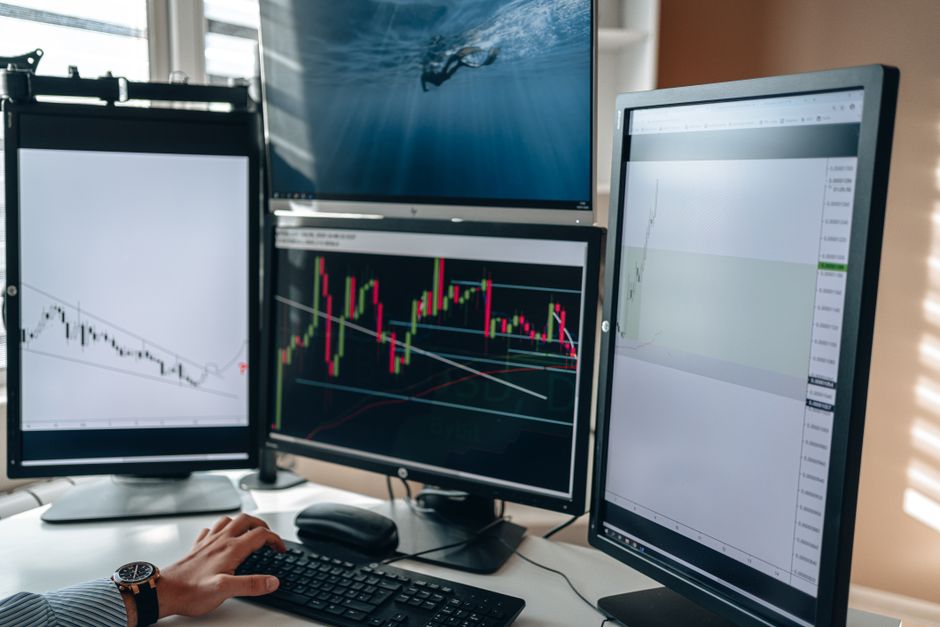
A modern trading desk with screens displaying financial charts and graphs, showcasing a digital analysis setup.

Failed opening range breaks studied as a category rather than as bad luck: the conditions that produce them in runs, the shapes the aftermath takes, and whether reversing into the other direction is practical.

What We Cover

The Break That Does Not Hold

Price clears the edge of the opening range, the entry triggers, and within a few bars it is back inside. This is the single most common way an opening range trade goes wrong, and it is common enough that treating it as bad luck stops being a useful stance. A failed break is a recognisable event with recognisable conditions around it, and studying it as a category rather than as a series of individual disappointments changes what you notice on the next one.

They Arrive in Clusters

False breaks are not evenly distributed across sessions. They concentrate where the level itself was weak, where the range was formed by something other than genuine two sided interest, and where the wider market has no direction to lend. Several sessions in a row can produce them, then a stretch of clean resolutions, because the underlying conditions persist for a while rather than resetting overnight. Recognising the conditions is more practical than trying to judge each break as it happens.

What Comes Next Is the Interesting Part

The failure itself is only half the event. What price does in the following period varies enormously, and lumping every failed break together hides that. Some come back inside and go quiet for hours. Some cross the whole range and take out the other side. Some fail, return, and then break the same edge again successfully. These are different outcomes with different causes, and knowing which kind you are looking at matters more than knowing that the break failed.

Trading the Failure Is a Separate Question

The idea of reversing into the opposite direction after a failed break is old and widely repeated, and it is not obviously wrong. It is also considerably more difficult than it sounds, because the entry, the level to place a stop behind, and the definition of what counts as a confirmed failure are all less clean than they are for the original break. Whether it is worth doing at all depends on things that vary by instrument and by regime.

Studying the Failures

The writing here is about false breaks specifically: the conditions in which they cluster, the shapes of what tends to follow one, and the honest case for and against taking a position in the other direction. Range interpretation, stop sizing and session psychology are covered better elsewhere. The narrow subject is the break that failed, treated as something to be understood rather than merely absorbed.

Latest Guides

Modern workspace showcasing financial analysis with digital charts and reports.

Is a False Break Tradable in the Other Direction

The suggestion turns up everywhere. If the break failed, the move is in the other direction, so take it. The reasoning is not silly and the pattern is real, but the gap between noticing something and being able to trade it is wider here than in most places, and the difficulties are all in the details rather than in the concept.

What the Idea Rests On

Man seated at a desk using laptops to monitor stock market trends and investments.

The logic is about positioning rather than price. A break attracts participants who expect continuation, and their stops sit back inside the range. When the break fails, those stops are in the path of the return, and the return therefore has fuel that a normal move inside the range would not have.

That is a coherent mechanism and it explains why the strongest moves of a session sometimes begin from a failed break rather than a successful one. The move is not being driven by fresh conviction. It is being driven by people getting out of a position they no longer want, which is a more reliable source of pressure and a more short lived one.

Defining the Failure Is Harder Than It Sounds
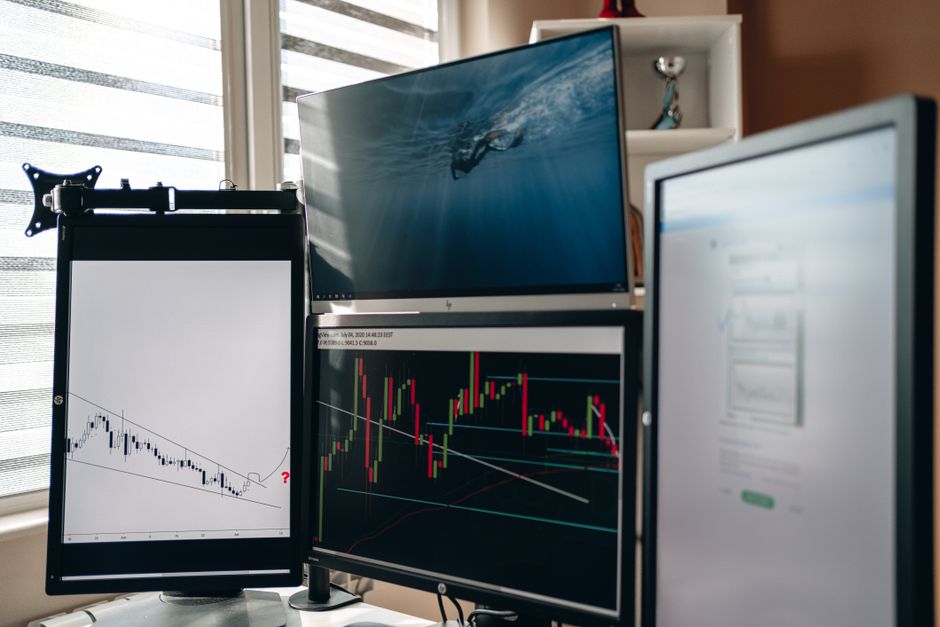
A home office setup featuring multiple monitors displaying trading charts and data analysis.

The original break has a clean definition: price crosses a level you drew before the session. The failure has no equivalent. Price back inside the range is not enough, since it happens constantly. Price back below the midpoint is a lot of movement to wait through, and by then much of the opportunity is gone.

Whatever definition you pick, it will be looser than the one governing the primary trade, and looser definitions produce more entries of lower average quality. This is the single biggest practical objection, and it is not a matter of finding better wording. The event genuinely is less crisp.

The Stop Has Nowhere Obvious to Go

On the original break, the stop has a natural home at the opposite edge or just back inside the level. On a reversal after a failure, the equivalent level is the extreme of the failed break itself, which was set by a spike a few minutes earlier and has no history behind it. Placing a stop there means placing it behind a level nobody defended.

The alternative is a wider stop at the far edge of the range, which turns the trade into something with a very different risk profile from the one you were originally taking. Neither answer is comfortable, and the discomfort is structural rather than a matter of preference.

It Collides With the One Trade Rule

Anyone running a single entry per session has a further problem, and it is not a small one. The reversal comes immediately after a loss, it presents itself as a correction to that loss, and it is indistinguishable in the moment from the re-entry that the one trade rule exists to prevent.

Even if the reversal is genuinely a valid setup, taking it after a stop out means relying on your judgement at the worst moment of the session to tell the two apart. The only clean way through is to have decided in advance, in writing, that the reversal is part of the plan with its own conditions. Deciding it while looking at a fresh loss is not deciding, it is rationalising.

What Would Have to Be True

For this to be worth doing rather than merely worth noticing, a few things need to hold. The failure needs a written definition tight enough that you would recognise it identically on a chart with the outcome hidden. The stop needs a location you can justify without reference to the loss you just took. The instrument needs to be one where failures tend to traverse rather than stall, which is something only your own record can tell you.

If those hold, it is a reasonable second pattern to run. If they do not, watching the reversal happen without you is the correct outcome and not a missed opportunity, because a setup you cannot define is not a setup you were ever positioned to take.

A desk with trading tools, including a tablet showing stock market data and three clocks.

The Conditions Where False Breaks Cluster

Traders keeping any kind of record eventually notice that failed breaks bunch together. A week arrives where nothing holds, followed by a stretch where breaks run cleanly. Framing each failure as an isolated piece of bad luck misses this, and it also throws away the most useful thing about them, which is that the conditions producing them are visible before the break rather than only afterwards.

When the Range Height Is Wrong for the Day

Close-up of a laptop displaying trading charts on a stylish wooden table, ideal for financial themes.

A range that is unusually compressed relative to what the instrument normally produces creates edges that sit very close together. Ordinary noise is then enough to cross one, and crossing it means almost nothing about who is in control. The break triggers on movement that would not have registered as movement on a normal session.

The opposite case fails for a different reason. A range that is unusually tall has already consumed a large part of what the instrument typically travels in a day. Price reaching the edge is arriving at a point where the move is already stretched, and there is less fuel available to carry it further. Both extremes generate failures, and they do so through completely different mechanisms.

When the Edge Was Never Defended

A man celebrates in front of multiple computer monitors displaying stock market graphs, indicating trading success.

An opening range high produced by a single spike is not the same object as one produced by three separate rejections. The first is simply the furthest price happened to reach during one burst. The second is a level where sellers repeatedly appeared. Breaking the first is unremarkable, because nobody was standing there in the first place.

This is why the path price took through the range matters as much as the two numbers it produced. A session where price spent most of its time pinned to one edge has a low that was never really tested, and a break of it carries far less information than the chart suggests.

When the Wider Market Has Nothing to Say

A break needs continuation from somewhere, and on most instruments a good deal of that comes from the broader move rather than from the instrument itself. On a session where the wider market is drifting sideways, a break of an individual range is asking to sustain a move without any help, and it frequently cannot.

This is the clearest source of clustering. Directionless conditions last for days or weeks at a time, so every session inside that stretch faces the same difficulty, and the failures arrive in a run that has nothing to do with the quality of the individual setups.

When the Range Formed Around an Event

A scheduled release landing at or near the open produces a range through a single violent repricing. The edges of that range are the extremes of a spike, and once the repricing is complete the instrument frequently settles into something much quieter. Breaks of spike extremes fail routinely, because the level was created by an event that has already finished rather than by any ongoing disagreement.

There is a related case that catches people out. When a release is scheduled shortly after the range window closes, the market often goes quiet in anticipation, produces a break on thin participation, and then reverses hard the moment the number lands. The break was real enough at the time and stood no chance of surviving.

Using This Before the Fact

None of these conditions can be measured precisely and none of them predicts an individual outcome. What they support is a rough judgement about the odds facing today's break before it happens: whether the range is a normal height, whether its edges were actually defended, whether the broader market is doing anything, and whether an event created or is about to interrupt the level.

Answering those four questions honestly will sometimes say the break is worth taking anyway. The value is not in avoiding every failure, which is impossible, but in knowing which sessions are stacked against you before the entry rather than assembling the explanation afterwards. A failure you anticipated is a different experience from one that arrived out of nowhere, and it is far less likely to be followed by a second bad decision.

A multi-monitor stock trading setup showcasing charts and data analysis in a home office setting.

What Tends to Happen Right After a Failed Break

The stop is hit and attention usually moves on. That is a mistake if you intend to trade this way for any length of time, because the period immediately following a failed break is where most of the information is. Failures do not all resolve the same way, and the differences between them are more consistent than the failures themselves.

The Return and the Stall

A sleek, modern workspace featuring trading monitors and a tablet for project management.

The most common aftermath is also the least dramatic. Price comes back inside the range, drifts toward the middle, and does very little for a long time. Nothing was resolved by the break attempt and nothing is resolved by its failure. The session simply reverts to the condition it was in before, which is often a market with no particular opinion.

For anyone tempted to do something after a failed break, this is the outcome to keep in mind, because it is the one where any further action is punished by time rather than by loss. A reversal position taken into a stall does not lose quickly, it just sits, which is arguably harder to handle than a clean stop.

The Full Traverse

A businessperson using dual monitors to analyze stock market trends with charts and graphs.

Less common and much more consequential is the failure that keeps going. Price returns inside the range, does not stop in the middle, and continues through to break the opposite edge. The initial break turns out to have been the final push of a move that was already exhausted, and its failure released everything that had been positioned for continuation.

What seems to distinguish this case is where the range was formed relative to the session before it, and how one sided the range itself was. A break of an edge that price had been pressed against for the whole period, which then fails, has a considerable distance of untested ground behind it, and there is little to slow the return.

The Second Attempt

The third pattern is the one that causes the most annoyance. Price breaks, fails, returns inside, spends a while regrouping, and then breaks the same edge again and holds. The original idea was correct and the timing was not.

These tend to look different from the first attempt while they are forming. The second push is usually slower, starts from a higher base inside the range, and does not carry the same burst of activity. That absence of drama is part of why it works: the first attempt cleared out the positions that were leaning the wrong way, and the second is not fighting them.

Speed Says More Than Distance

Across all three, the useful early signal is how quickly price comes back rather than how far past the level it went. A break that reverses immediately, within a bar or two, tends to lead to a traverse or a genuine reversal, because the rejection was decisive and nobody defended the new ground. A break that drifts back slowly over a longer period is more often the setup for a second attempt, since the level is being retested rather than rejected.

Distance is misleading here. A break that ran a long way before failing feels worse and is usually the less significant of the two, because most of that distance was a single burst that was never held.

Watching After the Stop

The practical suggestion is simply to keep looking. Note where price ended up thirty minutes after each failure, and whether it stalled, traversed, or came back for a second successful attempt. That record builds quickly, it costs nothing beyond attention on sessions that are already over for you, and it is specific to the instrument you actually trade.

What it produces is not a rule so much as a set of expectations. Knowing that failures on your instrument mostly stall, or mostly traverse, changes how you feel about the stop being hit and what if anything you would consider doing next. That is worth having before the question comes up rather than while a position is closing.

Top